Monday, March 10, 2008

New Sinningia specosia


Charles Lawn hybridized this fabulous flower which was shared on the Gesneriad list. Please check out
gesneriphiles@lists.ibiblio.org to keep up on the latest in the world of gesneriads.

A Companion Plant...

Here's something that I haven't tried growing under fluorescent lights before. Although this isn't a gesneriad, what a colorful, fun plant to try growing beside the violets! Here's the story by guest blogger Sharon.
A NEW PLANT

I have always limited the plants growing under lights to African violets and gesneriads simply because I like them and don't want to waste the space on ordinary plants. On Valentines Day I bought a miniature rose plant. Cute little thing I must say. It sat on my kitchen table but many of the buds didn't open and it started to look pathetic.

After examining the roots, which were very hearty, I transplanted it into a slightly larger pot with a light soil mix of sphagnum peat moss, perlite and vermiculite. Then I placed it under my grow lights. It has been less than one month and I have new growth and it now looks very healthy. I am hopping it will bloom.

The one thing that has surprised me is the need for water. It does not like to be even slightly dry. If it does dry out a bit the leaves turn yellow and drop off the plant.


Saturday, March 01, 2008

What's Blooming Today


An Optimara violet grown on a window sill. A Sinningia cardinals with a close up of it's flower. A pretty orange Kohleria and a Kohleria "Lono".

Click on the photos to enlarge! A couple of them are pretty cool.

Thursday, February 21, 2008

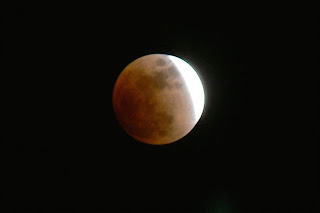
Signs of the Moon


If the national publication can talk about moon signs, then we can get in on the action and show you something really cool about the moon too.....


Awfully pretty, eh?

The Polls

The polls are in! With an average of 10 people voicing their opinions, we have the latest on what's hot! The first question was ,"What is your favorite plant in the gesneriad family?" African violets, Streptocarpus and Eucodonias tied with 3 votes each. Sinningias came in second with 2 votes and Episcias, Kohlerias and 'a mix of them all' got one vote each cast for them.

The favorite colors and patterns are, with three votes each, Edged and Fantasy blooms. Coming in second were the Thumb Print blooms and with one vote each, Solid Color, Two Toned and Chimera blossoms!

With more people voting we will improve the "margin of error" and perhaps the wire services will then be coming to us for help with their future queries....... Umm, vote in the polls!

Saturday, February 09, 2008

Saintpaulia rupicola


Click on the photo to see it larger!


Here are a couple of shots of a species violet called S. rupicola. The second photo shows what I hope is a healthy seed pod forming on the plant. Seed pods usually take about 6 months ON the plant to mature, dry and turn a darker color. Gesneriad seeds, and this includes African violet seeds, are very tiny and look almost like specks of dust when ripe.

Friday, February 01, 2008

Easy Growers!

Here's something to try when you want interesting plants with plenty of flowers. The gesneriad list frequently has members give knowledgeable replies to inquiries, one of which asked which Sinningias were good for growing in average home conditions. I copied the reply so that I can share it in the blog:

Sinningias are a good choice for a beginner with warm conditions. Mini
Sinningia hybrids are good for growing under lights, since they can
thrive and bloom with less intense light. Most will flower when they're young
plants. The micro mini species, such as Sinningia pusilla, S. pusilla
'White Sprite', and S. sp. "Rio das Pedras" should be grown in a terrarium
under lights to maintain the higher humidity levels they need.


Many of the larger species Sinningias will be happy growing on a warm
sunny windowsill or under fluorescent lights. I would recommend S. cardinalis,
S. iarae, S. eumorpha varieties, S. lineata, or S. leucotricha as easy long
lived plants for a beginner. These species may not flower as immature
seedlings, but will produce blooms easily after a couple of growth cycles or
when they have developed a good tuber.


Please consider being a member of the gesneriad society. Membership has many benefits, one of which is access to the seed fund where very wonderful and rare seed can be attained for next to nothing.

Tuesday, January 29, 2008

Experiments.


Some of the results are in! Club members experimented with a variety of components regarding violet growth and vigor.

The photos show a short and easy experiment resulting in some obvious change from the control plant to the experimental plant. Plant number one was watered with plain tap water for nearly two months with no additional supplements added. Plant number two was watered once a week with water and a water soluble fertilizer such as Miracle Grow. In only a short amount of time the fertilized plant was already showing improved growth and bloom. It was approximately 50% larger in only 8 weeks of growth.

Other more interesting experiments were done. One member watered with vitamin C added to the water. Although vitamin C is water soluble, and it would seem that it would not be able to "build up" in the soil, the plant with extra C did less well that a plant without.

Many people are somewhat confused about what size pot to use at what stage of a violet's life. It turns out that with two similar size and variety "babies", the plant started in the 2" pot grew much faster and was much larger than the plant started in a 4" pot filled with the same potting soil and grown in the same conditions.

The plants that were grown in natural window light and under fluorescent light showed some differences also. The plants that were of similar size and identical variety were placed in a bright window and under plant stand lights. The plants both looked good, were healthy and had a considerable flowers but the one in the natural light was a much more "open" plant. That is to say the leaves were spread out more and less compact. The blooms were somewhat shorter but spread out in a pleasing way across more of the plant. The violet grown under the lights was "tighter", more compact and the blooms stood a little taller and were grouped into the center of the plant in a more circular pattern. Both plants had a good healthy color and leaf size.

Someone tried growing plants and adding Epsom salts, which is magnesium sulfate, to the water. The plants, which were pale to start with and lacking some of the expected green pigment, greened up considerably. Magnesium is an essential element in the chlorophyll molecule. The advantage of magnesium sulfate over other magnesium soil supplements such as dolomitic lime is its very high solubility.

Other people tried manipulating plants by adding a natural "stress" to their lives to simulate wind moving the leaves. Although not conclusive, the plants that were wiggled and moved as if they were being gently blown in the wind seemed to grow more vigorously and had more sturdy leaf structures.

It would be interesting to take these rather unscientific test results and see if the same results would occur under laboratory conditions with control populations and more individual plants for comparison. What should we experiment on this year?

Saturday, January 19, 2008

What's Blooming This Morning

Streptocarpus 'Party Girl" and Kohleria 'Marquis de Sade' are blooming on a -15 degree below zero January morning.

When looking through the plants this morning to see if any needed water, there was some powdery mildew on a couple of the violet's leaves. It's a good time of year to check your collection for problems or pests and take action right away to prevent any further problems.

Fertilizer is important this time of year too... some of the plants that winter indoors and summer outside are looking a little "light green" in the leaves. Remember to feed them so they are in great shape to go back outside when spring finally comes.

Monday, January 14, 2008

Gesneriad Field Trip


The Gesneriad Club went to the Como Conservatory this past weekend to see the annual poinsettia show. There were thousands of blooming poinsettias featuring the Famous Artists varieties. The tropical rain forest room is the newest feature with displays that allow you to get a close-up view of various fish, turtles, birds, insects and animals. The main conservatory dome has the palm display which has over a hundred varieties of palm plants. The most interesting room though, in my opinion, is the agriculturally useful room. This has various plants that are grown for harvest including chocolate, star fruit, black pepper, coffee, fig, papaya, sugar cane and many more. What a fabulous way to get out of the cold and get the feeling of summer right here in MN in January.